Introduction
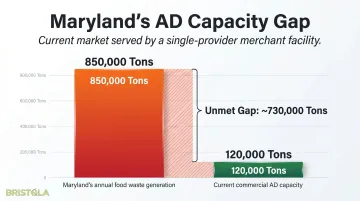
Maryland generates roughly 850,000 tons of food waste annually — and most of it still ends up in landfills. That's a problem beyond aesthetics. According to the EPA, landfilled food waste accounts for 58% of fugitive methane emissions from municipal solid waste landfills, making it one of the highest-impact targets for greenhouse gas reduction.
Maryland's legislature responded with HB264, a commercial food waste diversion mandate that's been in active enforcement since 2023. The law applies to any qualifying generator within 30 miles of an eligible facility — and penalties reach $5,000 per violation.
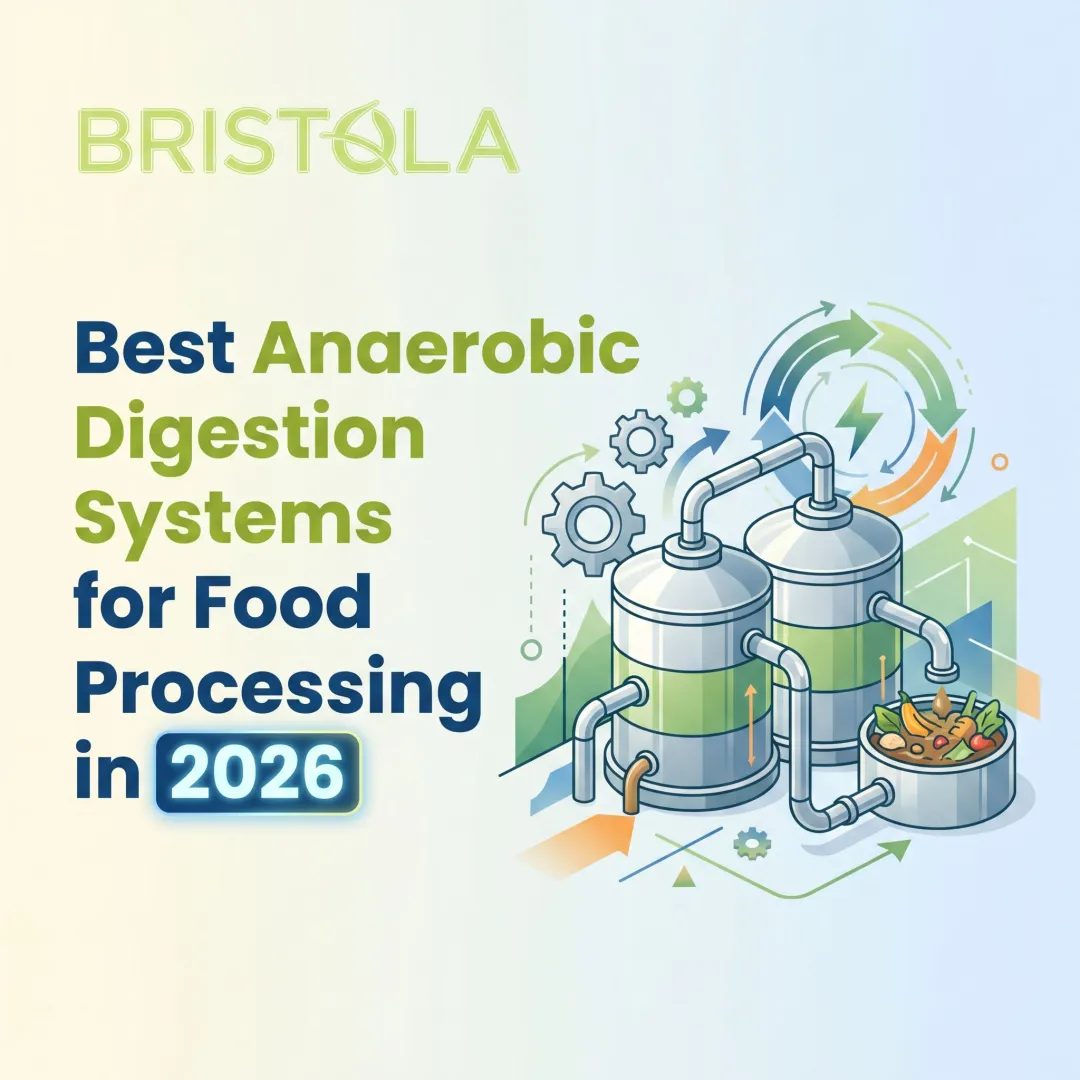
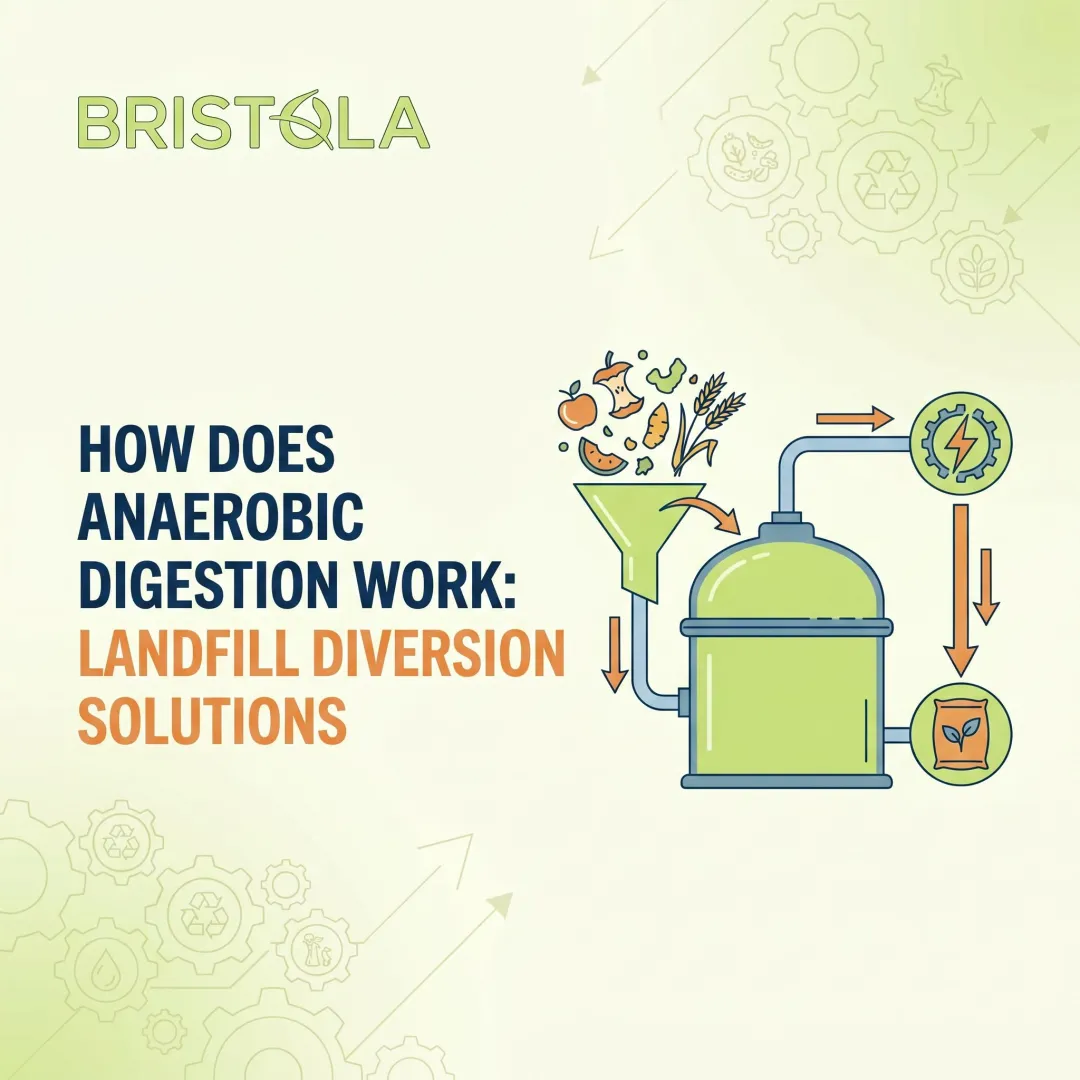
Anaerobic digestion (AD) has emerged as the primary infrastructure solution. It converts food waste into renewable natural gas (RNG) and nutrient-rich digestate — generating energy sold back to the grid and agricultural amendments used as fertilizer, rather than simply keeping material out of landfills.
This guide profiles the leading AD providers operating in Maryland and helps food waste generators and facility managers make a grounded decision. Here's what we cover:
- Which providers serve Maryland and what feedstocks they accept
- How each facility handles RNG output and digestate disposition
- Compliance support for HB264 reporting requirements
- Practical considerations for generators selecting a hauling or drop-off partner
TL;DR
- Maryland's HB264 requires commercial food waste generators producing ≥1 ton/week to divert waste if within 30 miles of an eligible facility
- Anaerobic digestion converts food waste into RNG and digestate, serving as both a compliance path and a revenue-generating sustainability strategy
- BTS Bioenergy (formerly Bioenergy Devco) operates Maryland's only commercial-scale food waste AD facility, processing up to 120,000 tons/year in Jessup
- Their Halethorpe facility, the Maryland Organics Recovery Center (MORC), opened July 2025 and expands access for food distribution sector clients
- Sediment buildup is the leading cause of reduced biogas output, making proactive digester maintenance critical to long-term performance
Anaerobic Digestion for Food Waste in Maryland
Anaerobic digestion breaks down organic material in sealed, oxygen-free tanks using microbial activity, producing biogas (primarily methane and CO₂) and digestate as outputs. Food waste ranks among the most biogas-productive feedstocks available, driven by its high moisture content and fast-degrading organic compounds.
Maryland's Regulatory Baseline
HB264 created a phased mandate for commercial food waste diversion:
| Phase | Threshold | Effective Date |
|---|---|---|
| Phase 1 | ≥2 tons/week | January 1, 2023 |
| Phase 2 | ≥1 ton/week | January 1, 2024 |
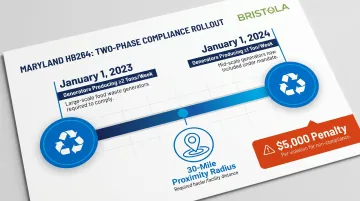
Proximity requirement: Generator must be within 30 miles of a willing organics recycling facility. A waiver is available if diversion costs exceed disposal costs by more than 10%. Penalties reach $5,000 per violation.
Eligible diversion methods include AD, composting, food donation, on-site organics processing, and agricultural use.
The Capacity Gap
Maryland's food waste generation (~850,000 tons/year) vastly outpaces current AD infrastructure. The Maryland Bioenergy Center processes up to 120,000 tons annually, leaving a gap exceeding 700,000 tons without dedicated AD capacity. Some volume flows to composting facilities, but the state's AD infrastructure remains undersized relative to demand.
Best Anaerobic Digestion Providers in Maryland for Food Waste
Providers were evaluated on verified operational presence in Maryland, processing capacity, feedstock flexibility, technology maturity, service model, and alignment with HB264 compliance requirements.
BTS Bioenergy — Maryland Bioenergy Center (MBC)
Background: BTS Bioenergy (renamed from Bioenergy Devco in May 2025) operates the Maryland Bioenergy Center in Jessup — the only commercial-scale food waste AD facility in Maryland. Located on the Maryland Food Center Authority campus, MBC began operations in 2022 and reached full nameplate capacity in 2024.
Standout metrics:
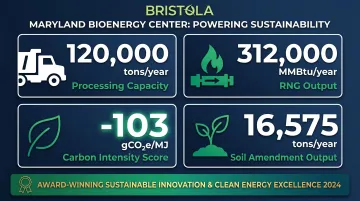
- Processes up to 120,000 tons/year of food waste
- Produces approximately 312,000 MMBtu/year of RNG, injected directly into the BGE natural gas pipeline
- Achieved a carbon intensity score of -103 gCO₂e/MJ — one of the lowest in the industry
- Generates roughly 16,575 tons/year of nutrient-rich soil amendments
- Won the Environment + Energy Leader Top Project of the Year Award (2023), the 2023 Climate Leadership Award, and the 2024 SEAL Business Sustainability Award
| Data Point | Detail |
|---|---|
| Location | Jessup, MD (Maryland Food Center Authority campus) |
| Processing Capacity | Up to 120,000 tons/year |
| Primary Output | RNG (BGE pipeline injection) + soil amendment |
| Service Model | Merchant facility — tipping fee-based intake |
| Capital Cost | $25 million ($15M in state grants/loans from MDE and MEA) |
Feedstocks accepted: Source-separated liquid and solid food byproducts including fats, oils, and grease (FOG); sugars; processing residuals; and food waste from manufacturers, distributors, institutions, and commercial haulers.
Who it serves best: Supermarkets, food processors, manufacturers, and institutional generators with consistent, high-volume food waste streams seeking a compliant merchant facility within the 30-mile HB264 radius.
BTS Bioenergy — Maryland Organics Recovery Center (MORC)
Background: Opened in July 2025, the Maryland Organics Recovery Center in Halethorpe, MD is a purpose-built upstream sorting and depackaging facility that feeds organic material to MBC for AD conversion. It fills a specific gap — most AD facilities can't accept palletized, packaged food waste directly, so MORC handles the separation step upstream.
How it works: MORC receives packaged goods, separates and recycles packaging materials (plastics, cardboard, glass, wooden pallets), then sends the extracted organic content to MBC. It provides certificate of destruction documentation — important for recalled or expired inventory.
| Data Point | Detail |
|---|---|
| Location | Halethorpe, MD |
| Opened | July 2025 |
| Target Feedstock | Palletized expired/recalled food, port cargo rejections, frozen distribution waste, cooking oil |
| Service Area | Baltimore, DC, Virginia, NJ, PA, I-95 corridor |
| Zero-Waste Design | Separates and recycles all packaging materials |
Who it serves best: Food distribution centers, retailers managing recalled inventory, importers with port cargo rejections, and high-volume packaged goods generators who need a logistics-compatible intake solution.
Maryland Environmental Service (MES)
MES is a self-supporting, independent state agency that functions as a facilitator and infrastructure partner — not a direct AD operator. Its most significant contribution to Maryland's food waste AD infrastructure is a 20-year land lease agreement with BTS Bioenergy that enabled the Jessup facility to be co-located on the Maryland Food Center Authority campus.
MES also collects food waste from BWI Airport and transports it to composting and AD facilities in the region.
What this means for generators: Commercial food waste generators contract directly with BTS Bioenergy for tipping services — not with MES. MES's role is enabling physical infrastructure and providing technical support for organics diversion programs at a public-sector level.
| Data Point | Detail |
|---|---|
| Role | Infrastructure facilitator and state agency partner |
| Direct AD Operations | None — land and support, not facility operation |
| Relevant to Generators | Indirectly; MES enables the Jessup site's existence |
What About Synagro and Other Providers?
Researching the full Maryland market turns up several names that appear in regional waste and energy discussions — but not all of them handle food waste AD. Two that come up frequently don't qualify:
- Synagro's Maryland facilities (Back River Pelletech in Baltimore, City of Cumberland) focus exclusively on municipal biosolids via heat drying and pelletization — no food waste AD or co-digestion capability exists at either Maryland location
- No additional commercial-scale food waste AD operators were identified in Maryland. Clean Earth Capital's Brandywine facility handles contaminated soil, not food waste AD. No other verified operators emerged across industry directories or MDE permitting records
That leaves Maryland as effectively a single-provider market for merchant food waste AD services. The unmet capacity — roughly 730,000 tons annually — is a significant infrastructure gap the state is still working to close. For generators evaluating options now, that reality shapes the decision: BTS Bioenergy's MBC is the only compliant commercial-scale destination in-state.
How We Chose the Best Anaerobic Digestion Providers
The Evaluation Framework
Providers were assessed across six criteria:
- Verified operational capacity in Maryland — not proposed or planned
- Feedstock flexibility across waste types — packaged goods, FOG, and liquid organics
- Technology track record — operational years, uptime history, proven RNG output
- Service model fit — merchant facility vs. design-build, logistics compatibility
- Environmental performance — documented carbon intensity scores, soil amendment quality
- HB264 compliance alignment — confirmed status as an eligible diversion facility
Common Mistakes Buyers Make
Selecting a provider based only on proximity is the most frequent error. Proximity satisfies the 30-mile HB264 requirement, but it doesn't tell you whether the facility accepts your specific waste stream, has current intake capacity, or can accommodate your logistics.
Other pitfalls worth avoiding:
- Confusing merchant facilities with design-build models. Merchant facilities charge tipping fees (comparable to or slightly above landfill rates) — no capital investment required. Design-build-operate systems require significant upfront capital but give the generator direct control over output.
- Overlooking digester maintenance when evaluating providers. A facility's stated capacity means little if sediment buildup is degrading active digester volume. In one documented case, a commercial digester that hadn't been cleaned in four years saw daily biogas yield drop by 20% and volatile solids reduction fall below 25%.
Why Digester Maintenance Matters for Long-Term Performance
The maintenance issue deserves more than a bullet point. For food waste generators evaluating merchant facilities — or operators running on-site AD systems — digester performance over time is the variable most often underestimated.
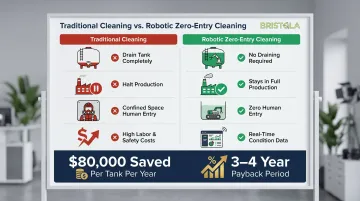
Sludge and sediment accumulate at the tank floor continuously. Left unaddressed, this reduces effective digester volume, compromises mixing efficiency, and suppresses biogas output. Traditional cleaning requires draining the tank, halting production, and sending workers into confined spaces — a costly, safety-intensive process that most facilities defer too long.
Bristola's zero-human-entry robotic cleaning system addresses this without taking the digester offline. Their submersible ROV enters through the tank roof or lagoon cover via a patented equalization chamber entry system, removes accumulated sediment, and transmits real-time condition data — all while the facility stays in production.
The financial case is documented: according to Bristola's cost analysis, operators save approximately $80,000 per tank per year compared to traditional drain-and-clean methods, with a three-to-four-year payback period over 15 to 20 years of asset life.
For AD facilities under HB264-driven intake pressure, consistent uptime isn't a maintenance checkbox — it's tied directly to compliance capacity and revenue.
Conclusion
Maryland's regulatory environment and limited merchant AD capacity make provider selection a high-stakes decision. With effectively one commercial-scale facility serving the state's merchant market, generators in the HB264 compliance window have little room for error. Understanding that facility's feedstock criteria, intake logistics, and operational track record matters more than it would in a competitive market.
The right evaluation goes beyond initial pricing and proximity. Scalability, logistics compatibility, and digester infrastructure reliability determine whether a provider relationship holds up over years — and that reliability depends on how well the facility itself is maintained.
For AD facility operators focused on keeping digesters running at capacity, Bristola's robotic cleaning system addresses that directly — cleaning while the tank stays in operation, with no human entry and no production downtime.
Contact Bristola to discuss your facility's maintenance needs or schedule a demo.
Frequently Asked Questions
What is anaerobic digestion for food waste?
Anaerobic digestion is a biological process where microorganisms break down food waste inside sealed, oxygen-free tanks, producing biogas (captured as RNG) and digestate (a nutrient-rich soil amendment). It diverts organic material from landfills while generating usable energy and agricultural inputs.
How much does an anaerobic digester cost?
Commercial-scale AD facility construction typically runs $400 to $1,500 per wet ton of annual processing capacity. Maryland's Bioenergy Center, for example, cost $25 million for 120,000 tons/year of capacity, with $15 million covered through MDE and MEA grants and loans. Generators using merchant facilities pay tipping fees instead, avoiding direct capital exposure.
Is food waste diversion required in Maryland?
Yes. Maryland's HB264 requires commercial food waste generators producing ≥1 ton/week to divert waste to an eligible facility (AD, composting, food donation, or agricultural use) if one exists within 30 miles. Violations carry civil penalties up to $5,000, though a waiver applies if diversion costs exceed disposal costs by more than 10%.
What types of food waste can anaerobic digesters process?
Common acceptable inputs include food scraps, fats and oils, packaged food waste (with depackaging), produce trimmings, dairy, liquid organic waste, and processing residuals. Woody, fibrous, or heavily contaminated materials are poor AD feedstocks and are typically excluded.
What are the outputs of anaerobic digestion of food waste?
AD produces two outputs with commercial value: biogas, refined into pipeline-quality RNG for energy use, and digestate, a wet organic material split into liquid and solid fractions used as fertilizer or soil amendment. Both partially offset tipping fees.
How does anaerobic digestion compare to composting for food waste in Maryland?
AD handles a broader input range — including liquids, fats, and packaged goods — requires less land, and produces energy. Composting is more accessible at smaller scales and sequesters carbon directly into soil. Maryland's HB264 accepts both as compliant diversion methods, so the choice often comes down to proximity, logistics, and waste stream composition.