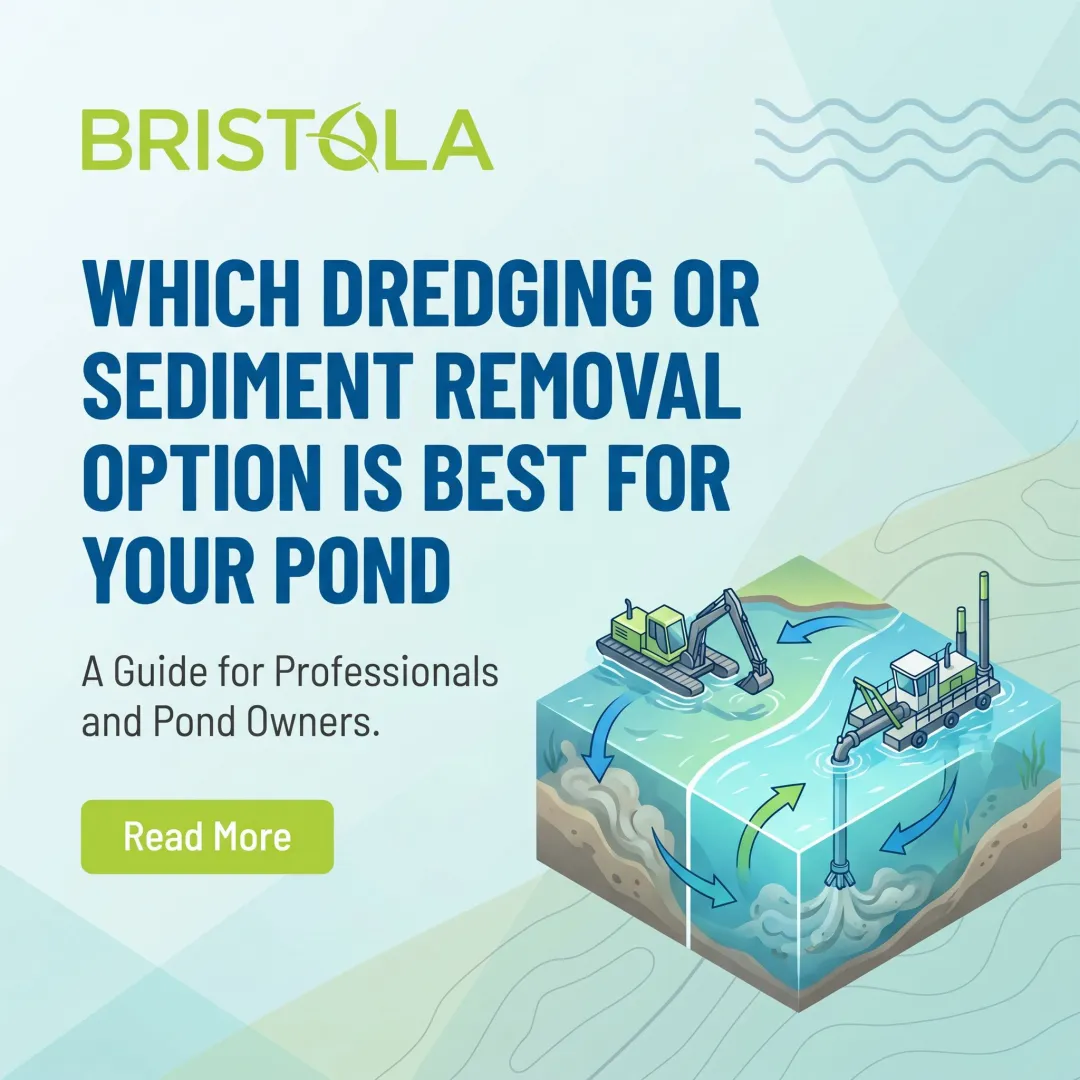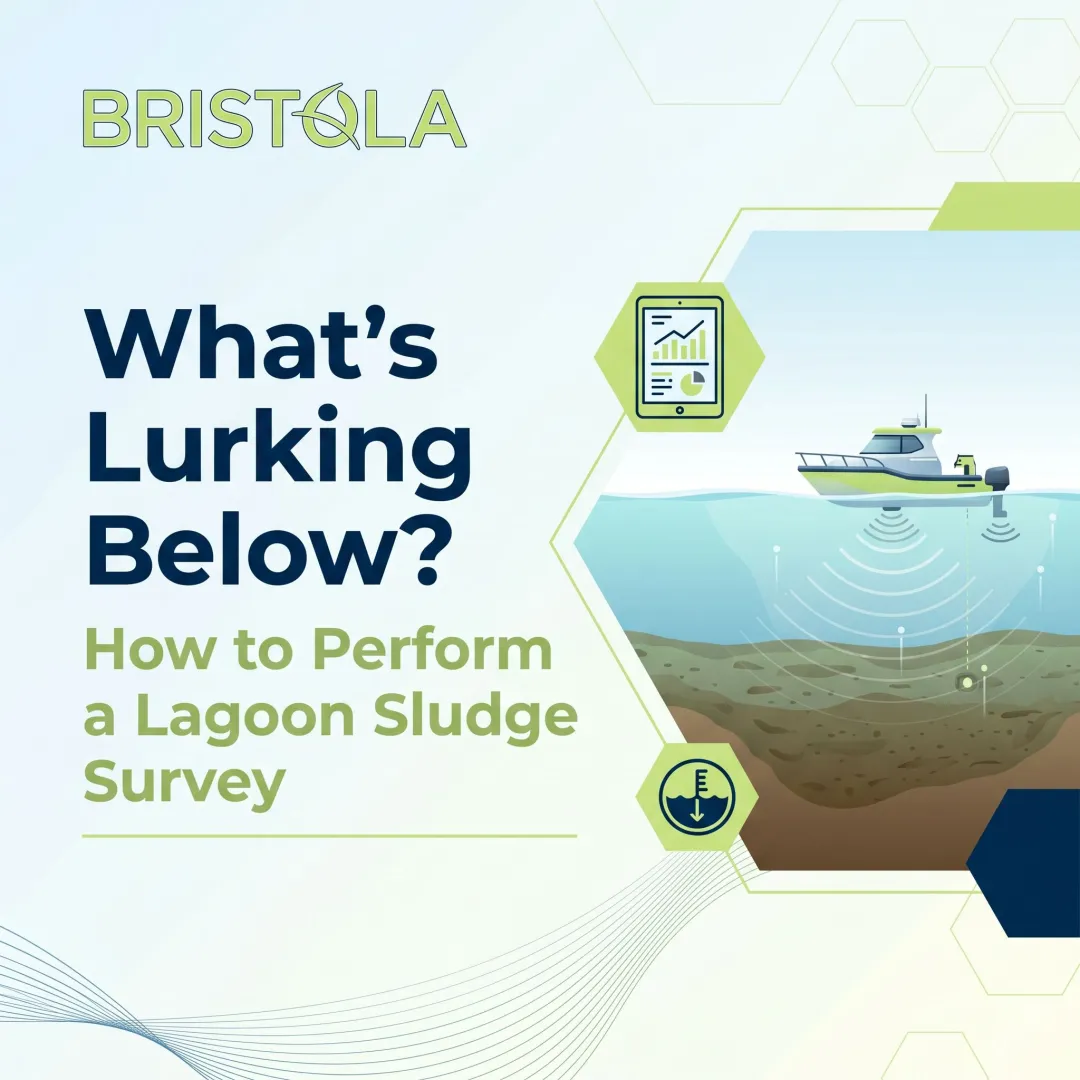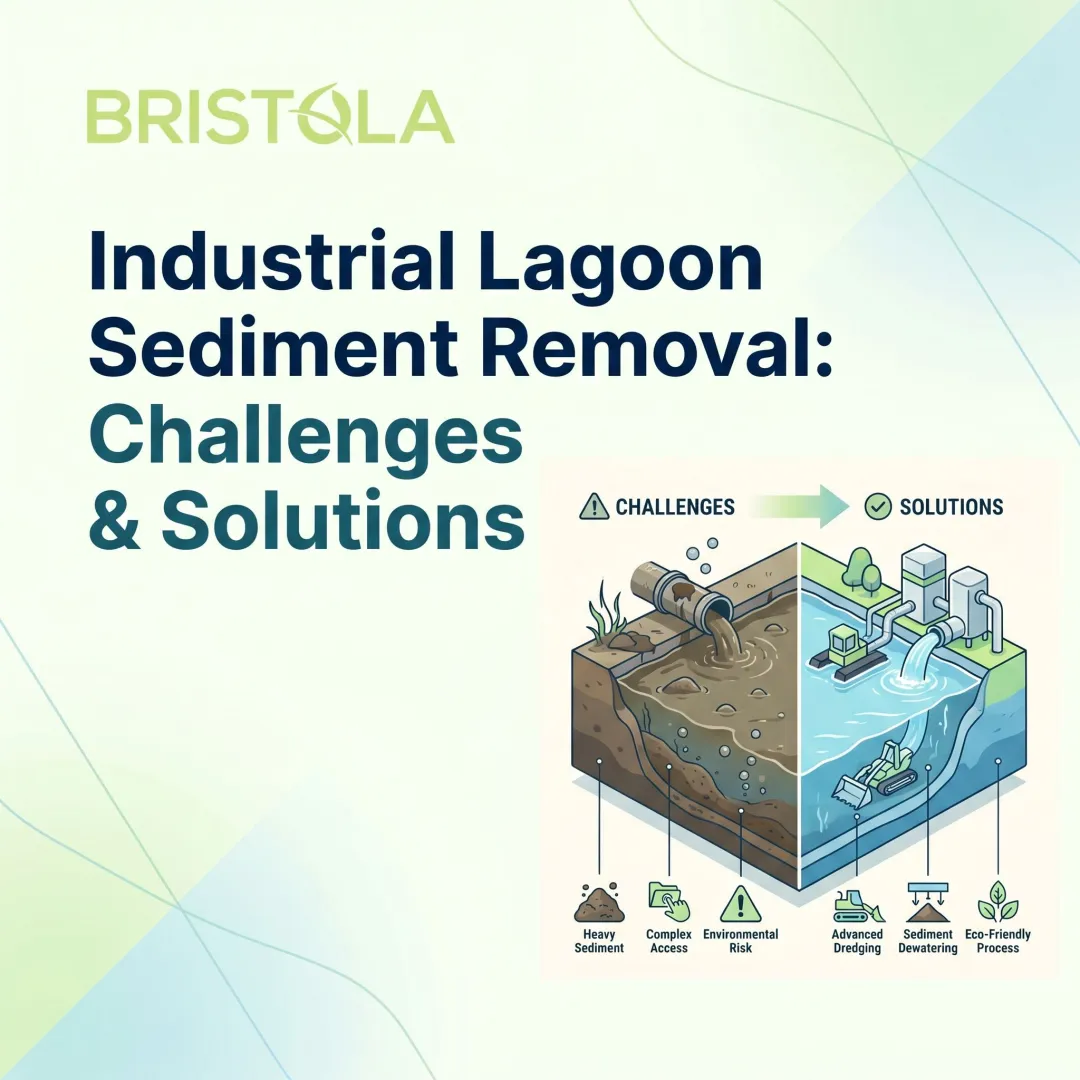
This guide covers exactly what pond sludge is, why it forms, how to spot it before it becomes critical, and which removal methods actually work. We'll also address what happens when the same problem scales up to industrial proportions.
TL;DR
- Pond sludge is decomposed organic matter that accumulates at the pond bottom, producing toxic hydrogen sulfide as it deepens
- Fish can be stressed or killed at dissolved oxygen levels below 3 mg/L — sludge is the primary driver of that depletion
- Four removal methods work: manual netting, pond vacuuming, beneficial bacteria treatments, and full draining
- Aeration is the most effective prevention tool — aerobic decomposition is roughly 10× faster than anaerobic breakdown
- In anaerobic digesters and covered lagoons, accumulated sludge cuts biogas output by 10–15% and turns routine maintenance into a confined-space safety risk
What Is Pond Sludge?
Pond sludge is the thick, dark layer of decomposed organic matter that builds up at the bottom of any body of standing water over time. It's made up of dead algae, fish waste, uneaten fish food, fallen leaves, grass clippings, and sediment runoff — everything that sinks and isn't removed.
The real problem starts once that layer deepens. Oxygen can't penetrate deep sediment, so the conditions at the pond bottom turn anaerobic. Bacteria called Desulfovibrio take over, using sulfate ions instead of oxygen for respiration and producing hydrogen sulfide (H₂S) as a byproduct. Some pond sediments contain over 100 mg/L of hydrogen sulfide — a concentration far beyond what fish can survive.
Why H₂S Is More Than Just a Bad Smell
The rotten egg odor is a warning, not just an annoyance. The 96-hour LC50 for H₂S in freshwater fish sits at just 20–50 µg/L (0.02–0.05 mg/L), with a recommended safe long-term limit of 2 µg/L. Lethal concentrations are invisible to the naked eye — there's no visible sign that water has become hostile to fish life.
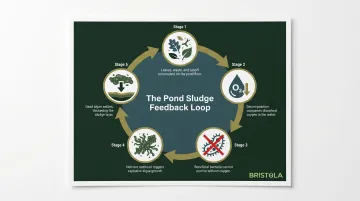
Beyond direct toxicity, sludge creates a feedback loop that compounds quickly:
- Organic buildup depletes dissolved oxygen
- Low oxygen kills aerobic bacteria that break down waste
- Without those bacteria, sludge accumulates faster
- Nutrient-rich water fuels algae blooms
- Dying algae sink and add more sludge
A thin, natural sediment layer in a wildlife pond is generally harmless. But in fish ponds, koi ponds, and industrial liquid storage systems, moderate buildup can cross dangerous thresholds before any visible warning signs appear — which is why monitoring and removal matter more than most operators expect.
What Causes Pond Sludge to Build Up?
Sludge accumulation has three main drivers. Most ponds deal with all three simultaneously.
Organic inputs are the raw material:
- Leaf litter and grass clippings blown into the pond
- Uneaten fish food that sinks before fish consume it
- Fish and wildlife waste
- Dying aquatic and marginal plants
Poor aeration and circulation slow natural decomposition. Without sufficient oxygen reaching the pond bottom, aerobic bacteria can't process organic matter efficiently — and buildup outpaces breakdown. This is the most controllable factor.
Nutrient overload accelerates the algae-sludge cycle. Fertilizer runoff, overfeeding fish, and overcrowded ponds all increase nitrogen and phosphorus levels. Excess nitrogen and phosphorus fuel algae blooms — and when those blooms die, they sink and become more sludge.
The numbers tell the story. Research on channel catfish production ponds found an average accumulation of 12.5 cm in the first year alone, with long-term averages around 1.44 cm per year. Over 15 years, a pond built to 1.5 m depth can lose nearly 40 cm of usable water depth to sediment — before any removal effort is made.
Warning Signs You Have a Pond Sludge Problem
Some signs are hard to miss. Others show up only once things have already gone wrong.
Visible indicators:
- Murky, pea-green, or dark brown water
- Floating mats of dead algae or organic debris
- Rotten egg smell — most noticeable after stirring the water or cleaning filters
Less obvious signs:
- Fish gasping at the surface or acting lethargic (dissolved oxygen dropping below 3 mg/L)
- Recurring algae blooms that come back no matter what you do
- A soft, silty bottom when wading in shallow areas
By the time these signs appear, the pond ecosystem is already under stress. Fish begin showing symptoms below 3 mg/L of dissolved oxygen, and mortality risk increases sharply below 2 mg/L. That's a narrow margin — one that's easy to miss if you're only watching for surface-level changes.
Regular sediment checks — probing the bottom with a stick to measure depth — are more useful than waiting for fish to gasp.
How to Remove Pond Sludge: 4 Methods That Work
The right approach depends on pond size, sludge severity, and whether fish are present. Most situations call for combining methods rather than relying on just one.
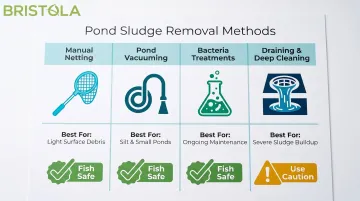
| Method | Best For | Fish-Safe? |
|---|---|---|
| Manual Netting | Light debris, leaves, surface mats | Yes |
| Pond Vacuuming | Silt, dead algae, fish waste (small-to-medium ponds) | Yes |
| Bacteria Treatments | Ongoing maintenance, post-clean prevention | Yes |
| Draining & Deep Cleaning | Severe, long-standing buildup | Risky — requires careful handling |
Manual Netting and Skimming
Best for light buildup made up of identifiable debris: leaves, plant material, surface mats. A coarse-mesh pond net or skimmer physically removes material from the bottom and surface before it fully decomposes. It's most effective as a first pass in smaller ponds and the least disruptive approach for fish. It won't touch fine silt or dissolved organic matter.
Pond Vacuuming
A pond vacuum draws sludge-laden water from the bottom and discharges it through a waste hose. It's the most practical DIY tool for small-to-medium ponds dealing with silt, dead algae, and fish waste. Many equipment rental companies carry pond vacuums, making them accessible for a one-off deep clean without a large upfront investment.
Beneficial Bacteria Treatments
Concentrated aerobic bacteria — available as tablets, liquids, or slow-release spheres — digest organic sludge and convert it to harmless carbon dioxide and water. Research shows Bacillus subtilis reduced organic matter by approximately 83.8% within five days in controlled conditions. Separate studies on heterotrophic bacterial supplementation found BOD reductions of 23% in aquaculture systems.
The key caveat: bacteria treatments work best in combination with physical removal, not as a standalone fix for heavy buildup. They're most valuable as a monthly maintenance dose that prevents sludge from rebuilding after a physical clean.
Draining and Deep Cleaning
Draining is the most thorough option for severe, long-standing buildup. Empty the pond, remove all sludge manually or with a pressure washer, then refill and re-cycle before reintroducing fish. It's also the most disruptive, eliminating the established bacterial colony and stressing or killing fish if not handled carefully.
Critical safety note: Always restore water chemistry and beneficial bacteria populations before returning fish to a drained pond. Cycling a newly cleaned pond typically takes 2–6 weeks. Most pond owners treat this reset period as an opportunity to establish better maintenance habits before problems have a chance to return.
How to Prevent Pond Sludge from Coming Back
Removal fixes the problem once. Prevention is what keeps it from returning.
Debris management:
- Skim leaves and organic matter from the surface before they sink
- Use a pond cover net in autumn during heavy leaf fall
- Direct lawn irrigation and runoff away from pond edges
Feeding and stocking:
- Avoid overfeeding — uneaten food is one of the most controllable sludge inputs
- Don't overstock fish relative to your filtration and aeration capacity
- Match fish species to your pond's volume and natural carrying capacity
Plant selection:
- Marginal and floating plants absorb excess nitrogen and phosphorus, reducing algae fuel
The Role of Aeration
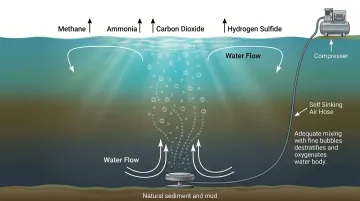
Aeration does more for long-term sludge prevention than any other single change. Aerobic decomposition proceeds roughly 10 times faster than anaerobic decomposition. That means keeping oxygen at the pond bottom fundamentally changes whether organic matter breaks down or accumulates.
Bottom diffused aeration is the most effective system for sludge prevention because it delivers oxygen directly to the sediment-water interface. Surface fountains and waterfalls increase overall dissolved oxygen but are less effective at reaching deep sediment where sludge forms.
A well-aerated pond supports an active aerobic bacterial population year-round — the natural engine for organic matter breakdown. Pair aeration with monthly beneficial bacteria treatments as a maintenance dose, and you give that bacterial population a consistent boost through every season.
When Pond Sludge Becomes an Industrial-Scale Problem
The same chemistry that clogs a backyard fish pond plays out at far greater scale in covered anaerobic lagoons, biogas digesters, wastewater treatment ponds, and industrial liquid storage facilities. At industrial scale, the consequences are significantly more severe.
Operational and Financial Impact
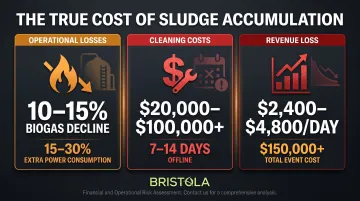
Sludge accumulation in anaerobic digesters creates dead zones where effective mixing is impossible, causing a 10–15% decline in biogas production while forcing mixing systems to consume 15–30% more power.
Bristola's case study data from an EnviTec digester documents an even sharper real-world impact: daily biogas output had dropped by 20%, volatile solids reduction had fallen below 25%, and the facility couldn't maintain proper mesophilic temperature during winter — all traced to a digester that hadn't been cleaned in over four years.
The financial math on traditional cleaning compounds these losses. According to industry estimates for anaerobic digesters, a professional cleanout costs $20,000–$100,000+, requires 7–14 days offline, and results in revenue losses of $2,400–$4,800 per day for a 1 MW biogas plant. A single cleanout event can cost over $150,000 when lost production is included.
The Confined-Space Safety Dimension
The financial risk of sludge accumulation is serious — the safety risk is potentially fatal. In enclosed lagoons and digesters, hydrogen sulfide accumulates and creates acute life-safety hazards. Bureau of Labor Statistics data shows that from 2011 to 2018, **1,030 workers died in confined spaces** in the U.S., with hydrogen sulfide identified as the single most common toxic gas — responsible for 38 fatalities. At concentrations above 150 ppm, H₂S causes olfactory fatigue, meaning workers lose the ability to smell it. The IDLH threshold is 100 ppm; exposures of 500–1,000 ppm are lethal within minutes.
Traditional drain-and-clean methods require workers to enter these spaces. Bristola's approach eliminates that requirement entirely. Their patented airlock-type entry system replaces the existing manhole cover with a unique entry portal that accepts a pressure box. A remote-controlled submersible ROV enters the tank or covered lagoon directly through the roof while the facility remains full and operational — no human entry, no production halt.
For biogas and RNG facilities, this addresses both critical concerns: it removes the safety risk of confined-space entry in H₂S-rich environments, and it enables regular maintenance cleaning that protects gas capture efficiency without the downtime that makes traditional cleaning economically prohibitive.
Frequently Asked Questions
Should I remove sludge from the bottom of my pond?
Yes, when buildup is causing odors, cloudy water, or reduced oxygen levels. A thin natural sediment layer in a wildlife pond is generally fine, but fish ponds need intervention once sludge becomes noticeable. Left unchecked, deeper buildup accelerates the problem quickly.
How do I get crystal clear pond water?
Combine approaches: vacuum or net out existing sludge, add beneficial bacteria to digest remaining fine particles, ensure strong aeration and filtration, and stop new debris from entering. No single method achieves clear water on its own.
What causes pond sludge to smell so bad?
Deep, oxygen-depleted sludge produces hydrogen sulfide (H₂S) as anaerobic bacteria break down organic matter. This is the rotten egg odor you notice when sediment is disturbed or when the sludge layer grows thick enough to off-gas into the water column.
How often should I remove sludge from my pond?
Most fish and koi ponds benefit from a thorough clean once or twice a year (spring and/or autumn), supplemented by monthly beneficial bacteria treatments and regular surface skimming to slow accumulation between cleanings.
Is pond sludge harmful to fish?
Yes. Heavy sludge depletes dissolved oxygen, releases toxic hydrogen sulfide, and fuels algae blooms. Fish show active stress symptoms below 3 mg/L of dissolved oxygen, and mortality risk increases sharply below 2 mg/L; both are thresholds that heavy sludge can push a pond past.
Can I vacuum and use bacterial treatments at the same time?
Yes, and they work better together. Vacuuming removes the physical bulk of sludge; bacterial treatments digest the fine remaining particles and maintain healthy bacteria populations long-term. For best results, vacuum first, then introduce bacteria to handle what the vacuum leaves behind.