Introduction
Every day, US wastewater treatment plants process roughly 34 billion gallons of wastewater, and that infrastructure is under constant pressure. When treatment systems fail—even partially—the consequences go well beyond a foul smell. Raw sewage contaminates drinking water sources, triggers disease outbreaks, and devastates aquatic ecosystems.
Municipal wastewater is the combined flow of domestic sewage, commercial discharge, and light industrial waste collected from an entire community. It's distinct from industrial wastewater treatment, which handles concentrated process streams from single facilities under different regulatory frameworks.
This guide covers the full picture: the stage-by-stage treatment process, sludge and biosolids management, collection system challenges, regulatory compliance, and the operational best practices that keep modern plants running efficiently and safely.
TLDR
- Municipal wastewater moves through up to four treatment stages: preliminary, primary, secondary, and tertiary
- 42% of U.S. river and stream miles are in poor condition due to elevated phosphorus levels
- U.S. wastewater infrastructure needs $630 billion in investment over the next 20 years
- Aeration alone accounts for 25–60% of plant energy consumption
- Digester cleaning is a neglected maintenance priority — traditional methods introduce serious confined space risks for workers
What Is Municipal Wastewater Treatment and Why It Matters
Before modern treatment infrastructure existed, untreated sewage flowed directly into rivers, harbors, and groundwater. Cholera outbreaks, typhoid epidemics, and mass waterborne illness followed. Today, waterborne diseases still affect over 7 million Americans annually, costing the healthcare system more than $3 billion each year—a figure that would be far higher without modern treatment systems.
Raw sewage discharged into receiving waters creates multiple cascading problems:
- Oxygen depletion from high biochemical oxygen demand (BOD), suffocating aquatic life
- Eutrophication driven by excess nitrogen and phosphorus, triggering algal blooms
- Pathogen contamination from bacteria, viruses, and protozoa that persist in water bodies
- pH disruption that alters aquatic chemistry and stresses fish populations
According to the EPA's National Rivers and Streams Assessment, 42% of U.S. river and stream miles are in poor condition due to elevated phosphorus, and 44% due to nitrogen. Nutrients are the most widespread stressor affecting the nation's flowing waters.
Municipal vs. Industrial Wastewater
Municipal influent is less concentrated than industrial process wastewater, but it's far more variable. Flow volumes swing dramatically with rainfall events, morning peaks, and seasonal population shifts. What enters the collection system also shifts based on what industrial users discharge on any given day. That variability in flow and composition—more than raw concentration—is what drives the need for multi-stage treatment systems built to handle unpredictable inputs.
The Municipal Wastewater Treatment Process: Stage by Stage
Most municipal plants follow a sequential process through up to four stages. Not every facility runs all four—the level of treatment depends on discharge permit requirements and whether the effluent will be reused or discharged to sensitive receiving waters.
Preliminary Treatment
The first stage protects downstream equipment. Wastewater enters through coarse bar screens that capture large solids—rags, wipes, plastics, and debris that would otherwise damage pumps and clog pipes. Fine screening follows to catch smaller particles.
Next, grit removal takes place in grit chambers where heavier inorganic particles like sand and gravel settle out. Without this stage, abrasive grit would accelerate wear on every piece of equipment downstream.
Primary Treatment
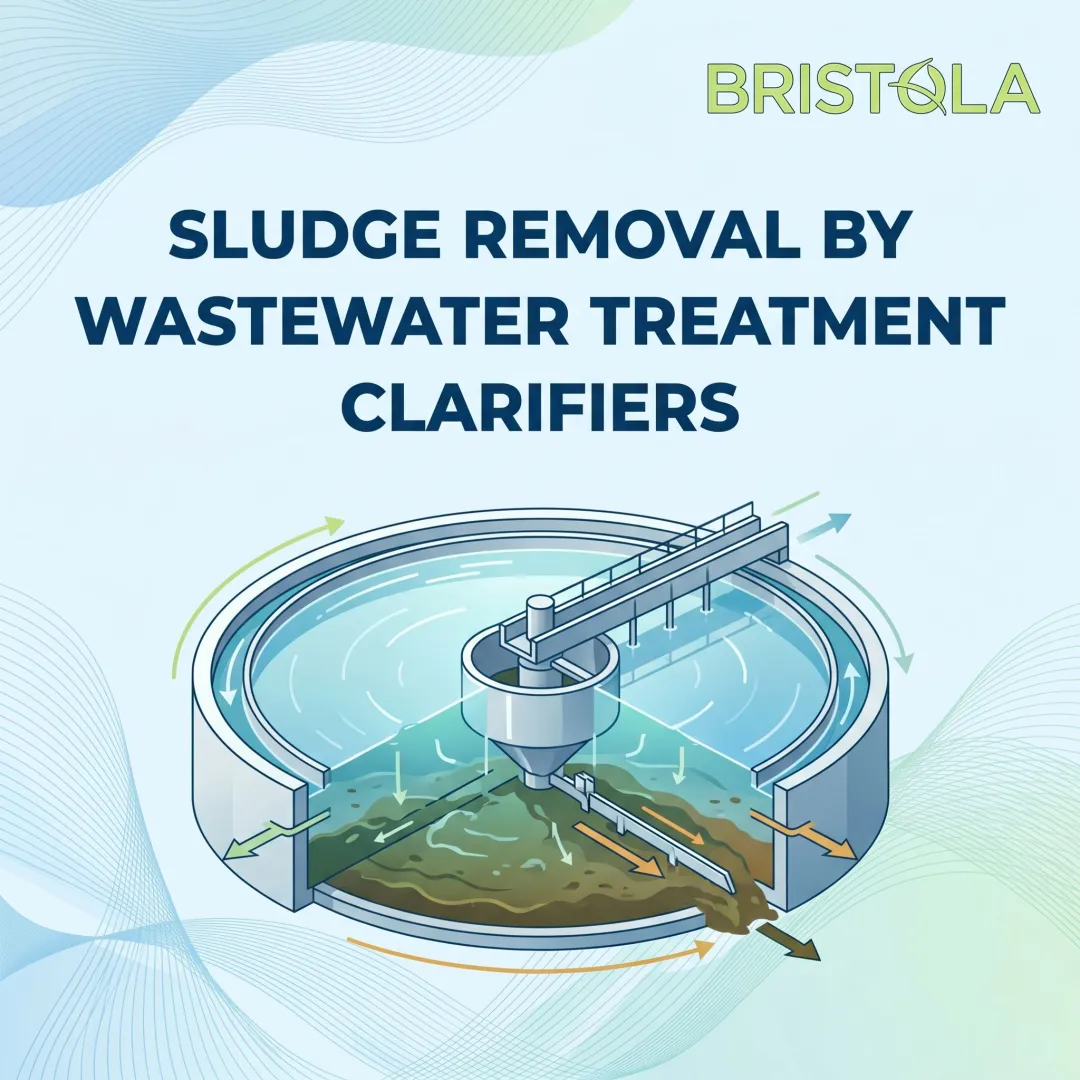
Primary treatment removes settleable solids through sedimentation. Wastewater flows slowly through large primary clarifiers, where gravity pulls suspended solids to the bottom as primary sludge while oils and grease float to the surface for skimming.
According to the EPA's Primer for Municipal Wastewater Treatment Systems, primary sedimentation typically removes 50–70% of total suspended solids (TSS) and 25–50% of BOD. Coagulants and flocculants are often added to improve solids separation and enhance phosphorus removal before the effluent moves forward.
Secondary Treatment
Secondary treatment uses microorganisms—primarily bacteria—to break down dissolved organic matter under controlled conditions. The two most common approaches:
- Activated sludge: Wastewater is mixed with a recycled microbial culture in aeration tanks. Air or oxygen keeps bacteria active. Secondary clarifiers then separate the biological sludge from the treated effluent.
- Trickling filters: Wastewater is distributed over a bed of media colonized by microbial biofilm. Organic matter is consumed as water trickles through.
Secondary treatment produces clarified effluent that meets discharge permit limits at many plants. The biological sludge generated is either recycled back into the process or sent forward for further processing. For facilities where secondary effluent satisfies permit requirements, no additional treatment is needed.
Tertiary Treatment
When secondary effluent isn't clean enough—either for discharge into sensitive water bodies or for reuse in irrigation, industrial processes, or indirect potable reuse—tertiary treatment provides a final stage of refinement. Common methods include:
- Granular media or membrane filtration to remove fine suspended solids
- Nutrient stripping to reduce nitrogen and phosphorus to very low levels
- Disinfection via chlorination, UV radiation, or ozone
One growing challenge: PFAS (per- and polyfluoroalkyl substances) are not reliably removed by conventional tertiary processes. As of 2024, there are no federal numeric effluent limits specific to PFAS for municipal treatment plants, though EPA has designated PFOA and PFOS as hazardous substances and is actively studying PFAS concentrations in POTW influent.
Granular activated carbon shows promise as a removal technology, but performance varies significantly by PFAS species and contact time.
Sludge and Biosolids Management
Every stage of treatment generates solids. Managing those solids—safely, cost-effectively, and in compliance with federal regulations—is one of the most operationally complex aspects of running a municipal wastewater plant.
From Sludge to Biosolids
Sludge collected from primary and secondary clarifiers is the major solid by-product of treatment. When properly treated and stabilized, it becomes biosolids—a nutrient-rich material with beneficial reuse potential. U.S. POTWs generated approximately 4.75 million dry tons of biosolids in 2021, according to EPA data. Of that volume:
- 48% was land-applied as agricultural fertilizer
- 42% was landfilled
- 10% was incinerated
The Sludge Treatment Sequence
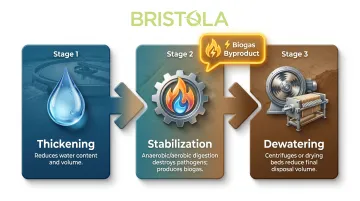
Before biosolids can be beneficially used or disposed of, raw sludge goes through several processing steps:
- Thickening – Reduces water content and volume before digestion
- Stabilization – Aerobic or anaerobic digestion destroys pathogens and reduces volatile solids; anaerobic digesters also produce biogas (primarily methane) as a recoverable energy source
- Dewatering – Centrifuges or drying beds remove additional water, reducing final disposal volume and cost
Land application is regulated under EPA's 40 CFR Part 503, which sets limits on pathogen content and heavy metal concentrations before biosolids can be spread on agricultural fields.
The Digester Cleaning Problem
Anaerobic digesters run continuously, but they carry a maintenance liability: over time, grit, sand, and settled inorganic solids accumulate on the digester floor. This reduces active digester volume, impairs mixing efficiency, and cuts biogas production—the exact energy recovery benefit that justifies running a digester in the first place.
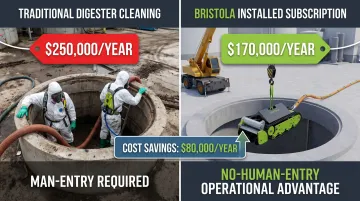
Traditional cleaning requires taking the digester completely offline, draining it, and sending workers inside for manual cleanout. That means months of lost biogas revenue, alternative sludge handling costs, and serious worker safety exposure under OSHA confined space entry regulations. For a facility running multiple digesters, those costs stack fast—and they recur every cleaning cycle.
Bristola's patented Equalization Chamber Entry System takes a different approach. The system installs on the manhole of an in-service digester and functions as an airlock-type entry mechanism, allowing a remote-controlled submersible ROV to enter and clean the vessel while it remains full and operational. No human entry. No production downtime.
The ROV travels to the digester floor on a winch system, and removed sludge travels through a flexible hose to an external processing point. Once cleaning is complete, the ROV retracts back through the entry portal.
That operational difference translates directly to cost. Bristola has documented that traditional cleaning methods run facilities roughly $250,000 annually when factoring in direct cleaning costs, lost biogas revenue during downtime, chemical treatment during the offline period, and other associated expenses. The company's permanently installed, subscription-based service model brings that annualized cost down to approximately $170,000 per tank—while eliminating the confined space entry risk entirely.
Municipal Collection Systems and Infrastructure Challenges
Sewer System Types and Overflows
Municipal collection systems fall into two categories:
- Separate sanitary sewers carry wastewater only, keeping it isolated from stormwater
- Combined sewers carry both wastewater and stormwater in a single pipe
Combined sewers create a serious problem during heavy rain: when flows exceed treatment plant capacity, untreated sewage overflows directly into waterways through combined sewer overflows (CSOs). Most modern systems use separate sewers specifically to avoid this, but many older cities still operate combined systems that require expensive long-term control plans.
Even separate systems face problems from inflow and infiltration (I/I): groundwater and surface water entering aging pipes through cracks, faulty joints, and deteriorated seals. I/I inflates flow volumes, overwhelms plant hydraulic capacity, and causes sanitary sewer overflows (SSOs). According to the EPA, 23,000 to 75,000 SSOs occur annually, releasing 3 to 10 billion gallons of raw sewage into the environment each year.
The Infrastructure Investment Gap
The EPA's 2022 Clean Watersheds Needs Survey estimated total wastewater and stormwater infrastructure needs at $630.1 billion over 20 years, a 73% increase from 2012 projections. The ASCE 2025 Report Card gave wastewater infrastructure a D+, with annual capital needs of $99 billion against actual spending that covers only about 30% of that figure.
Key funding trends driving this gap:
- Federal share of water infrastructure capital spending dropped from 63% in 1977 to roughly 9% today
- Average residential wastewater bills nearly doubled between 2010 and 2020
- Most utilities now prioritize asset management and rehabilitation over new construction
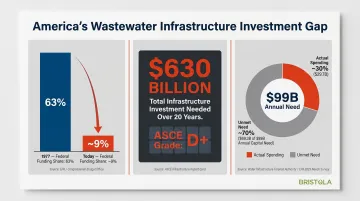
The result: local governments and ratepayers bear the financial load while utilities work to extend the life of aging systems through targeted rehabilitation rather than replacement.
Regulatory Framework: NPDES Permits and Compliance
Secondary Treatment Standards and NPDES
The EPA's National Pollutant Discharge Elimination System (NPDES) governs every discharge of treated wastewater to U.S. surface waters. NPDES permits set effluent limits based on two frameworks:
- Technology-based limits set the minimum performance floor based on what current treatment technology can reliably achieve
- Water quality-based limits apply stricter thresholds when technology-based standards alone aren't enough to protect the receiving water body
Under 40 CFR Part 133, secondary treatment standards set the minimum floor for municipal plants:
| Parameter | 30-Day Average | 7-Day Average |
|---|---|---|
| BOD5 | 30 mg/L | 45 mg/L |
| TSS | 30 mg/L | 45 mg/L |
| pH | 6.0–9.0 | — |
| Minimum removal | 85% | — |
Permits frequently impose stricter limits for nutrients, pathogens, or other parameters depending on the sensitivity of the receiving water.
Pretreatment and TMDLs
The National Pretreatment Program (40 CFR Part 403) requires industrial users discharging to municipal sewer systems to meet pretreatment standards before their waste enters the collection system. Approximately 1,500 POTWs administer local pretreatment programs. These programs prevent industrial pollutants from interfering with treatment processes, damaging infrastructure, or contaminating biosolids.
For impaired water bodies that can't meet water quality standards, EPA and states establish Total Maximum Daily Loads (TMDLs). A TMDL defines the maximum pollutant load a water body can absorb, then allocates reduction responsibilities among all contributing sources, including municipal dischargers.
Best Practices for Municipal Wastewater Plant Management
Monitor Continuously and Operate on Data
Real-time monitoring of BOD, TSS, dissolved oxygen, pH, and nutrient levels gives operators the visibility to catch process upsets before they become permit violations. Digital SCADA systems and sensor integration are now standard at modern facilities, enabling automated alerts, remote adjustments, and data-driven chemical dosing decisions.
Prioritize Energy Efficiency
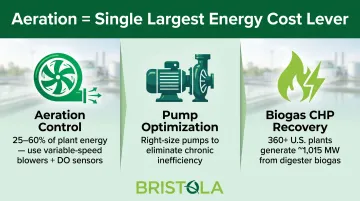
Aeration accounts for 25–60% of total plant energy consumption—up to 75% in activated sludge configurations. It's the single largest lever available for reducing operating costs and carbon footprint. Key strategies include:
- Variable-speed blower controls tied to real-time dissolved oxygen sensors
- Right-sized pump selection to avoid chronic inefficiency
- Biogas recovery via combined heat and power (CHP) systems; over 360 U.S. WWTPs already operate CHP using digester biogas, generating approximately 1,015 MW of capacity
Build a Proactive Asset Management Program
Deferred maintenance compounds costs fast. A structured asset management program addresses problems before they become emergencies:
- Scheduled inspection and condition assessment of mechanical and structural components
- Sewer rehabilitation programs that target confirmed I/I sources
- Life-cycle cost analysis embedded in capital budgeting decisions
- Regular cleaning of clarifiers, equalization basins, and digesters to preserve active volume and treatment capacity
Address Tank and Digester Maintenance as a Safety Priority
Digester and clarifier cleaning is often deferred because traditional methods are costly and dangerous. Confined space entry for manual tank cleaning exposes workers to toxic gases, oxygen-deficient atmospheres, and engulfment hazards—all covered under OSHA's confined space entry requirements.
Robotic cleaning systems like those offered by Bristola eliminate the need for human entry entirely. The permanently installed system lets facilities maintain anaerobic digesters and covered lagoons on a regular schedule—without taking vessels offline or creating confined space exposure.
For wastewater plants running biogas recovery programs, that matters beyond safety: a clean digester operating at full active volume produces more gas, which translates directly to energy output and revenue.
Plan for Emerging Contaminants
PFAS monitoring requirements are being incorporated into NPDES permits with increasing frequency. Facilities should:
- Identify likely PFAS sources entering the collection system through industrial pretreatment programs
- Evaluate treatment options—granular activated carbon and advanced oxidation processes are the most studied approaches
- Engage with state permitting authorities early to understand evolving requirements before they become compliance obligations
Frequently Asked Questions
What is the municipal water treatment process?
Municipal wastewater passes through up to four sequential stages—preliminary screening, primary sedimentation, secondary biological treatment, and tertiary polishing or disinfection—before discharge or reuse. Most plants run through secondary treatment as their endpoint; tertiary is added when discharge limits or reuse requirements demand it.
What is the difference between STP and WWTP?
The terms are often used interchangeably. WWTP (Wastewater Treatment Plant) is the more modern and inclusive designation, while STP (Sewage Treatment Plant) specifically emphasizes sewage. Both describe facilities that treat municipal liquid waste before it's returned to the environment.
How much does a municipal wastewater treatment plant cost?
Costs vary widely based on capacity, technology, and location. EPA's 2022 cost estimation tool benchmarks new lagoon systems at roughly $5 million per MGD plus fixed costs, while industry figures generally range from $3 to $15 million per MGD for activated sludge plants. Larger facilities benefit from economies of scale, which drives per-gallon costs down significantly.
What happens to sludge after wastewater treatment?
Sludge is thickened, stabilized through anaerobic or aerobic digestion, and dewatered before final disposition. Depending on quality and local regulations, it's either land-applied as biosolids fertilizer (48% of U.S. production), sent to landfill (42%), or incinerated (10%).
How often do wastewater treatment tanks need to be cleaned?
Frequency depends on influent loading and tank type, but digesters and clarifiers need cleaning every few years. Sediment accumulation reduces active volume and impairs process performance over time—regular cleaning maintains treatment efficiency and protects equipment.
What are the main challenges facing municipal wastewater treatment today?
The biggest operational challenges include aging infrastructure with a growing funding gap, tightening nutrient and PFAS discharge regulations, rising energy costs, workforce safety in confined space maintenance, and the compounding difficulty of doing more with flat or declining budgets.